
Acknowledgement: This article was written by Dr Claire O’Connor, with copyediting by Keep Able. Dr O’Connor is a Senior Research Fellow at University of New South Wales (UNSW), Neuroscience Research Australia (NeuRA), and HammondCare. Her work focuses on non-drug treatments for dementia that support function, wellbeing, and reablement.
Dementia is not a normal part of ageing, but it is more common as people get older.
If you support older people living in the community or in residential care, you will likely work with someone with cognitive decline or dementia.
With a reablement approach, you can support them to stay engaged and actively participate in everyday life.
What is a reablement approach?
Reablement is a person-centred approach that involves considering the person’s:
- Abilities
- Wants and values
- Support network and the environment around them
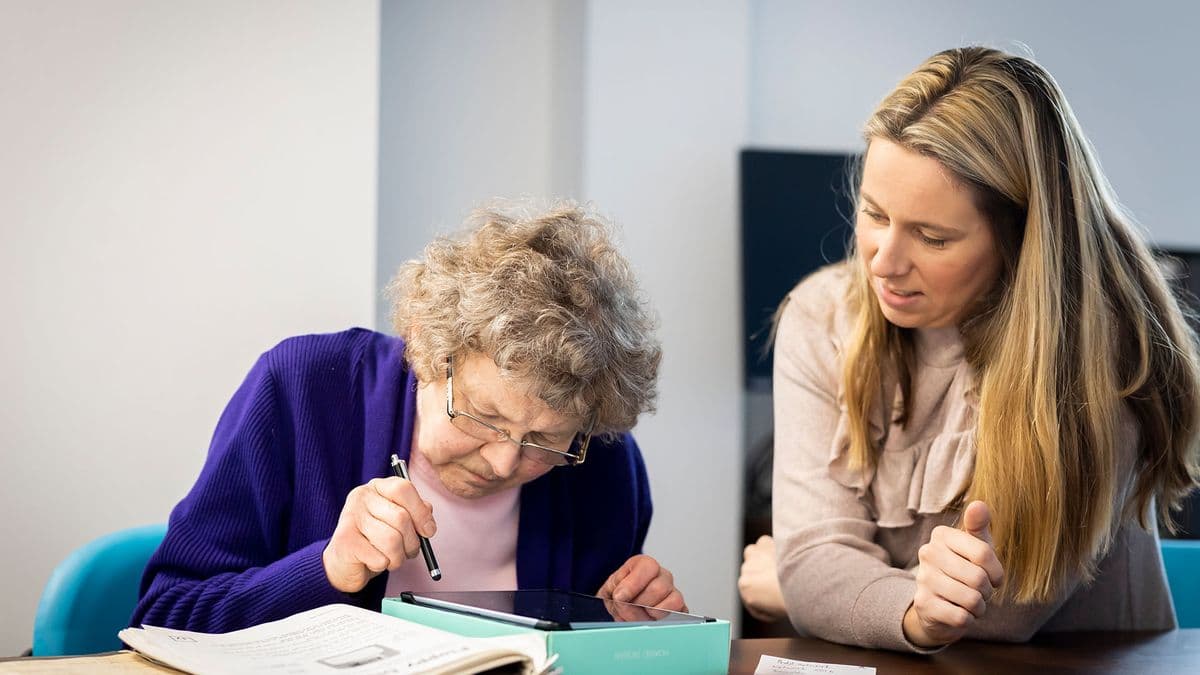
A reablement approach is about supporting the person to do the activities they want to do. This means focusing on their strengths and providing support where they may be having difficulties.
When it comes to supporting people with cognitive decline or dementia, applying a reablement approach is about:
- Maintaining their abilities for as long as possible
- Delaying decline as much as possible
- Finding new ways to support them to do the things they want to do when their abilities change
Why is a reablement approach important?
When a person has cognitive decline or dementia, they may find it difficult to take part in some of the activities they would like to do throughout the day.

When you work in a support role and notice that a person is finding it difficult to do something, it’s tempting to step in and take over.
But taking over leaves the person with fewer opportunities to meaningfully engage in life. Instead, support the person to keep participating by:
- Recognising their strengths
- Supporting where needed so they can still do as much of the activity as possible
By supporting the person to participate, you’re helping them maintain their abilities for as long as possible. That’s what taking a reablement approach is all about.
Tips for applying reablement
Get to know them
Ask the person what they want to do. If they can't tell you what they want but have family around, ask their family what they like and which activities they might enjoy doing.
Focus on their strengths
Focus on what the person can do, not what they can’t do. This will help you find ways to involve them in activities, rather than doing the activities for them. Here are some examples:
- If the person can’t do a whole load of washing, see if they can fold the clean laundry once it’s dry.
- If the person can’t cook an entire meal, see if they can prepare some of the ingredients.
- If the person needs help in the shower, see if they can still wash some parts of their body themselves.
Check in with their care team
If possible, liaise with the person’s allied health team and ask how you can support the programs they’re delivering. Here are some ways you can do this:
- Does the person have prescribed exercises you can encourage them to complete?
- Has the person’s occupational therapist recommended they practise certain activities? Can you support them to do these activities during your visit?
Support them step by step
If cognitive changes make it difficult for the person to participate, try using support strategies to help them get involved in an activity. Here are some examples:
- Break the activity into smaller steps.
- Prompt the person by clearly telling them what to do, one step at a time.
- Show them how to do the activity instead of only telling them.
- Set up the activity so they can see what they’re being asked to do.
- Remove distractions, such as clearing clutter to create a clear workspace or turning off the TV.
The most important thing is encouraging the person to stay engaged in activities. Don’t be afraid to get creative in how you make this happen. Sometimes it takes a bit of trial and error to figure out what works best for each person.
Get more information
There are many free resources about reablement and how to use it to support people with cognitive decline or dementia. Here are some for you to explore.
Dementia reablement resources
These practical, evidence-informed resources are designed to support the design, delivery, and evaluation of reablement programs for people living with dementia.
2025 World Alzheimer's Report
The focus of this report is on the topic of dementia rehabilitation. The report defines dementia rehabilitation as a person-centred approach to care. It's about supporting people with dementia to maintain or rebuild everyday skills so they can stay independent.
The report also delves into how this type of care is applied across the globe. It provides a roadmap for putting dementia rehabilitation into practice in different settings.
Introduction to dementia rehabilitation e-course
This free online course focuses on dementia rehabilitation. It aims to change attitudes, raise awareness, and show the importance of dementia rehabilitation. It also supports participants to better understand how they can deliver dementia rehabilitation.
Keep Able's free reablement resources
Keep Able has plenty of free resources covering a range of reablement topics. Head to the Resource Library to see what takes your interest.