
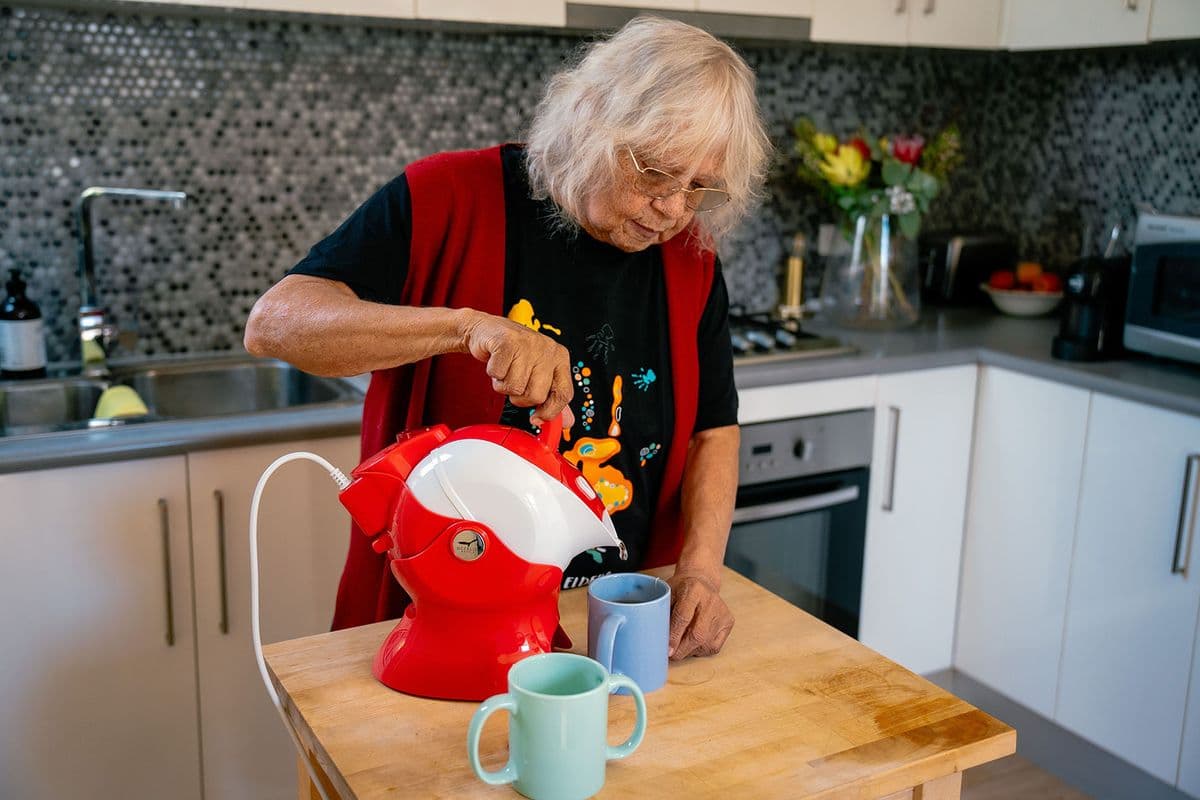
Assistive technology (AT) includes simple tools that make daily tasks easier. These products can help older people stay independent.
You can support your clients by explaining how AT can help them.
New to reablement strategies? You can learn about the basics here.
Why recommend assistive technology?
Some simple tools can make life easier for older people and help them stay independent. But many people don’t know what’s available.
Assistive technology (AT) isn’t just for older people. Lots of people use AT every day without realising it – like a shoehorn to help put on shoes. Still, some older people may feel unsure about using AT due to fear, stigma, or lack of knowledge.

What is assistive technology?
Assistive technology (AT) means using knowledge and skills to create helpful products and services that make everyday tasks easier and safer. There’s AT for almost any task.
What are the 3 main types of assistive technology?
- Low-risk AT: simple items you can buy ‘off the shelf’. They’re easy to use and unlikely to cause harm. Examples include kettle-tippers or dressing sticks.
- Under advice AT: usually available in stores but may pose some risk if used incorrectly. It’s best to get advice on how to choose and use them. Examples include recliner lift chairs or footrests.
- Complex AT: Specialised products. These items require a prescription from an allied health professional after a full assessment. Examples include powered wheelchairs, walking sticks, or prescription hearing aids.

How to introduce assistive technology
Support workers can recommend low-risk AT.
For AT that's under advice, consult a provider or clinician.
Complex AT should always be referred to a qualified allied health professional.
When discussing AT, highlight the benefits and use respectful language. Instead of clinical terms like ‘assistive technology’ or ‘aids’, try saying ‘helpful tools’.
Many older people only need AT temporarily. It helps them stay active and build capacity. When recommending AT for this purpose, present it as a short-term tool to support independence. The goal is to phase it out when it’s no longer needed.
What if clients don’t want to use assistive technology?
Some people hesitate because they think AT highlights their difficulties. You can overcome this by showing how AT supports independence.
Here’s an example:
One of your clients is unable to stand from the car seat on his own. A handy bar could help, but he dismisses the idea. He thinks it will make him look like he can’t manage on his own.
To help him accept and feel comfortable with the handy bar, try:
- Showing him how the handy bar will help him become more independent, not less
- Explaining it reduces the need to ask his friends and family for help getting in and out of the car
- Offering it as a short-term solution while he rebuilds strength
These approaches focus on the benefits of AT and its potential for temporary use while building capacity. This helps you frame the AT as empowering, not disabling.
Takeaway
There are many simple devices that make independent living safer and easier. It’s your client’s choice whether to use AT, but you can help by showing options and addressing concerns.
Want to learn more about AT for everyday tasks? Visit our AT Resources Hub.
Ready to learn more? Read about the next reablement strategy: share information.
You can also sign up for our e-newsletter here.